
Cozy to capable: Parenting Coaching Counseling Stress Enhancing Mindset Holiday IOP PHP

From Cozy to Capable: Parenting, Coaching, and Counseling With a Stress-Enhancing Mindset After the Holidays

The holiday break is often framed as a time to rest, reset, and recover. And for many kids it is joyful, connective, and regulating.

But for a subset of students, especially those with anxiety, OCD, school phobia, emetophobia, social school anxiety, and other panic-related disorders, a long break of 7–10 days or more can quietly lead to regression, not relief.

This isn’t because these kids are weak.

It’s because anxiety is a disorder of practice.

When school routines pause, so does daily exposure to uncertainty, discomfort, and demand. What looks like comfort on the surface can unintentionally erode confidence underneath. By early January, many families are stunned to find that a child who was “doing fine” in December now can’t tolerate the idea of returning to school at all.

This is where a stress-enhancing mindset becomes essential.

When Comfort Becomes the Problem

In the mental health field, stress is often treated as something to be minimized or avoided. We teach skills to reduce distress, remove triggers, and prevent emotional overload. In many cases, particularly when there is risk of self-harm or suicidal ideation—this approach is not only appropriate, it’s lifesaving.

But for students whose primary struggle is school-related panic and avoidance, chronic comfort-seeking can backfire.

Here’s why:

  • Anxiety shrinks when we approach
  • Anxiety grows when we avoid
  • Confidence is built through doing hard things repeatedly

A long holiday break often unintentionally reinforces:

  • Sleeping in later
  • Reduced expectations
  • Increased reassurance
  • More avoidance of uncomfortable tasks
  • Fewer opportunities to practice tolerating stress

By January, the student hasn’t lost ability, they’ve lost reps.

Anxiety Is Like a Muscle: Use It or Lose It

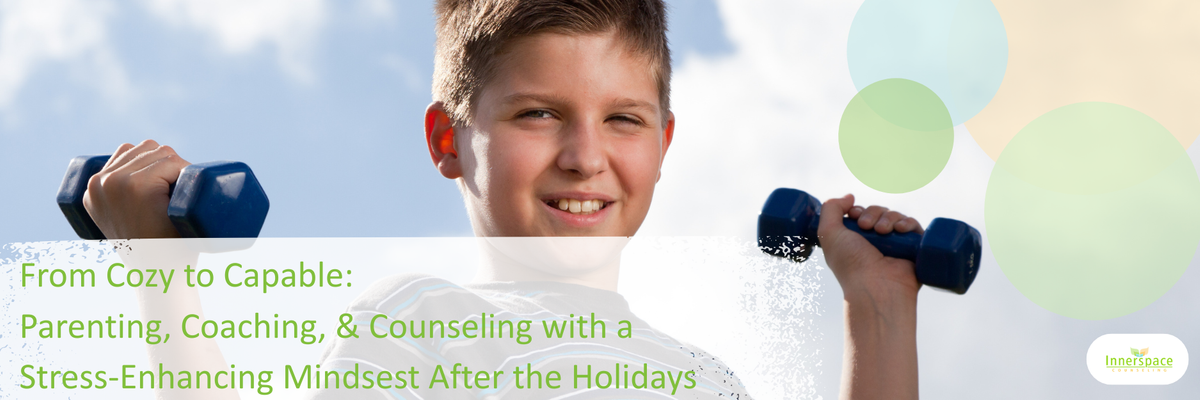
If we were helping someone get stronger physically by say, lifting heavier weights with their biceps, we wouldn’t tell them to rest their arms for weeks at a time and hope they come back stronger.

We wouldn’t ask:

  • “Are you sure you’re ready to lift today?”
  • “What if this feels uncomfortable?”
  • “Maybe you should avoid strain altogether.”

Instead, we would:

  • Gradually increase the load
  • Expect discomfort
  • Normalize soreness
  • Celebrate effort, not ease

Mental health works the same way.

When kids stop “lifting” mental loads uncertainty, social discomfort, separation, and performance demands become out of practice. When they continue lifting those loads, even imperfectly, their capacity grows.

This is the heart of a stress-enhancing mindset:

Stress is not the enemy. Untrained stress is.

Why January Is So Hard for Anxious Students

By early January, many anxious students face:

  • A sudden jump in expectations
  • Loss of the holiday “buffer”
  • Heightened anticipatory anxiety
  • Panic about panic
  • Shame about struggling “again”

Parents often respond with more comfort:

  • Extra reassurance
  • Delayed school starts
  • Mental health days
  • Negotiations and escape routes

While understandable, these responses can unintentionally confirm the anxiety’s core message:

“You can’t handle this.”

The result? Missed days turn into weeks. Avoidance becomes entrenched. Confidence erodes further.

A Different Path: Stress-Enhancing Interactions

As parents, coaches, and counselors, we are powerful interpreters of stress. Our language matters. Our framing matters. Our expectations matter.

A stress-enhancing mindset sounds like:

  • “This is uncomfortable and that’s how growth feels.”
  • “Your anxiety is loud, not dangerous.”
  • “We don’t wait to feel ready; readiness comes after we act.”
  • “Small hard things build confidence.”
  • “Assessment drives intervention. Right problem, right tool.”

It does not mean pushing kids into overwhelm or ignoring safety concerns. It means intentionally practicing discomfort in doses that build mastery, not fear.

Rethinking Self-Care: Stronger, Not Softer

Even self-care can drift into avoidance if we’re not careful.

Rest and recovery matter, but what are we recovering for?

When I coach clients and my own children on self-care, I lean back into the stress-enhancing mindset:

  • Walking instead of scrolling
  • Exercise that builds strength
  • Consistent sleep routines
  • Nutritious food
  • Reading and thinking, not just distraction
  • Sauna or cold exposure for physical resilience
  • Time outside
  • Purposeful structure, even on breaks

The question becomes:

“Does this make me stronger or just more comfortable?”

Comfort alone doesn’t build resilience. Capacity does.

Reframing the Holiday Break

What if we framed winter break not as a pause from stress but as an opportunity to train for it differently?

That might look like:

  • Keeping morning routines intact
  • Practicing brief separations
  • Doing mildly uncomfortable social exposures
  • Maintaining school-adjacent structure
  • Talking openly about discomfort as a skill

The goal isn’t to eliminate stress.

The goal is to increase tolerance for it.

Final Thought

For kids with school-related anxiety, success doesn’t come from avoiding stress. It comes from learning they can survive it.

A stress-enhancing mindset teaches children something powerful:

“I don’t need life to feel easy to function well.”

That lesson doesn’t just help them return to school in January.

It prepares them for life.

Small hard things build confidence.

And confidence is the antidote to avoidance.