High Fuctioning Anxiety Innerspace Counseling IOP PHP.png

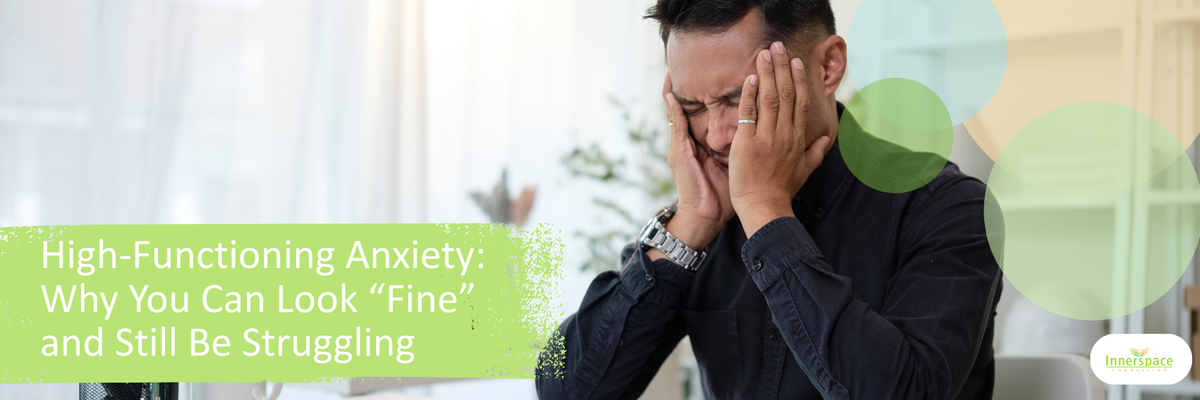
High-Functioning Anxiety: Why You Can Look “Fine” and Still Be Struggling

Have you ever been told, “But you seem like you’re doing great”, even when inside you feel overwhelmed, tense, or constantly on edge?

For many people, anxiety doesn’t look like panic attacks or avoidance. It looks like productivity. Achievement. Responsibility. Smiling through stress. This is often referred to as high-functioning anxiety, and it’s far more common than most people realize.

At Innerspace Counseling, we see many clients who appear successful, capable, and put-together, yet are quietly carrying an exhausting amount of anxiety beneath the surface.

What Is High-Functioning Anxiety?

High-functioning anxiety isn’t a formal diagnosis, but it’s a widely used term to describe people who manage daily life well on the outside while experiencing significant anxiety internally.

You might:

  • Meet deadlines

  • Show up for others

  • Perform well at work or school

  • Appear organized and motivated

…while simultaneously feeling:

  • Constantly tense or restless

  • Afraid of disappointing others

  • Overly self-critical

  • Unable to fully relax, even during downtime

Because things “look fine,” this type of anxiety often goes unnoticed by others and sometimes even by the person experiencing it.

Common Signs of High-Functioning Anxiety

High-functioning anxiety can show up differently in adults, teens, and even children. Some common signs include:

  • Perfectionism and fear of making mistakes

  • People-pleasing and difficulty saying no

  • Overthinking conversations or decisions

  • Chronic worry about the future

  • Feeling driven by fear rather than motivation

  • Trouble sleeping or quieting your mind

  • Physical symptoms like headaches, stomach issues, or muscle tension

  • Feeling guilty for resting or slowing down

Many people with high-functioning anxiety are praised for being “responsible,” “reliable,” or “high-achieving”, which can make it even harder to recognize that something is wrong.

Why High-Functioning Anxiety Often Goes Untreated

One of the biggest challenges with high-functioning anxiety is that it’s socially rewarded.

When anxiety fuels productivity, it can be mistaken for:

  • Strong work ethic

  • Ambition

  • Maturity

  • Being “the dependable one”

As a result, people may tell themselves:

  • “Others have it worse.”

  • “I should be able to handle this.”

  • “This is just how I am.”

  • “I’ll slow down later.”

Over time, though, constantly running on anxiety can lead to burnout, emotional exhaustion, irritability, depression, or physical health issues.

The Hidden Cost of Always “Holding It Together”

Living with high-functioning anxiety can feel like never being allowed to drop the ball or even set it down.

Many clients describe:

  • Feeling disconnected from joy

  • Struggling to be present

  • Living in a constant state of pressure

  • Feeling like rest has to be “earned”

Anxiety may help you get things done in the short term, but in the long term it often takes a toll on your mental health, relationships, and sense of self.

How Therapy Can Help High-Functioning Anxiety

Therapy isn’t just for when things fall apart. In fact, high-functioning anxiety often responds very well to counseling, especially when addressed early.

In therapy, you can:

  • Learn to recognize anxiety-driven patterns

  • Reduce perfectionism and self-criticism

  • Develop healthier coping strategies

  • Set boundaries without guilt

  • Learn how to rest without feeling anxious

  • Understand where your anxiety comes from — and how to work with it

At Innerspace Counseling, we focus on helping clients feel safer in their own minds and bodies, not just more productive.

You Don’t Have to Be “Struggling Enough” to Get Help

If you’ve ever wondered whether your anxiety “counts” because you’re still functioning, that question alone is often a sign it’s worth exploring.

You don’t have to wait until burnout, panic, or crisis.

You don’t have to justify your pain.

And you don’t have to keep doing everything alone.

Support can help you move from surviving on anxiety to living with more ease, balance, and self-compassion.

Considering More Support? We Offer Free Screenings for IOP & PHP

For some people, weekly therapy is enough to manage high-functioning anxiety. For others, anxiety has become so constant or overwhelming that more structured support is helpful, especially when burnout, avoidance, or emotional shutdown start creeping in.

At Innerspace Counseling, we offer a free screening call to help you better understand what level of care might be the best fit for you or your child. This is not a commitment, it’s a conversation.

Our Intensive Outpatient Program and Partial Hospitalization Program (IOP/PHP):

Our IOP and PHP programs are designed for individuals who need more than once-a-week therapy, but who can still live at home and remain connected to daily life.

We offer specialized treatment tracks, so care is tailored, not one-size-fits-all:

  • General Mental Health

  • OCD & Anxiety

  • Perinatal Wellness

During a free screening, we’ll help determine:

  • Whether IOP or PHP may be appropriate

  • Which track best matches your concerns

  • Or if traditional outpatient therapy is the right next step

You Don’t Have to Figure This Out Alone

If high-functioning anxiety is quietly running your life, even while everything looks okay, support can help interrupt that cycle before it leads to deeper exhaustion or distress.

A free screening is simply a chance to ask questions, get clarity, and explore your options in a supportive, pressure-free way.